
Tea Time: Tie Guanyin
A divine cup of a classic oolong from Teaism

It has been a while since I discussed my favorite type of tea, oolong. What better way to return to it than through a cup of tie guanyin (sometimes written as tieguanyin)? Most tea shops that sell classic teas will have this in stock. In fact, I think you are more likely to find it over baozhong, which is another classic. It is arguably the most well-known oolong, but I wouldn’t blame you if the name “tie guanyin” is unfamiliar, though. That’s because it often goes by another name: Iron Goddess of Mercy.
Before diving into the tea, I want to focus on the name. In addition to sounding cool, “Iron Goddess of Mercy” is the translation of tie guanyin. (I’m going to use “TGY” moving forward.) So, where does the name originate? It refers to the goddess of mercy in Buddhism. Specifically, Guanyin is the Chinese name for the bodhisattva Avalokiteśvara.
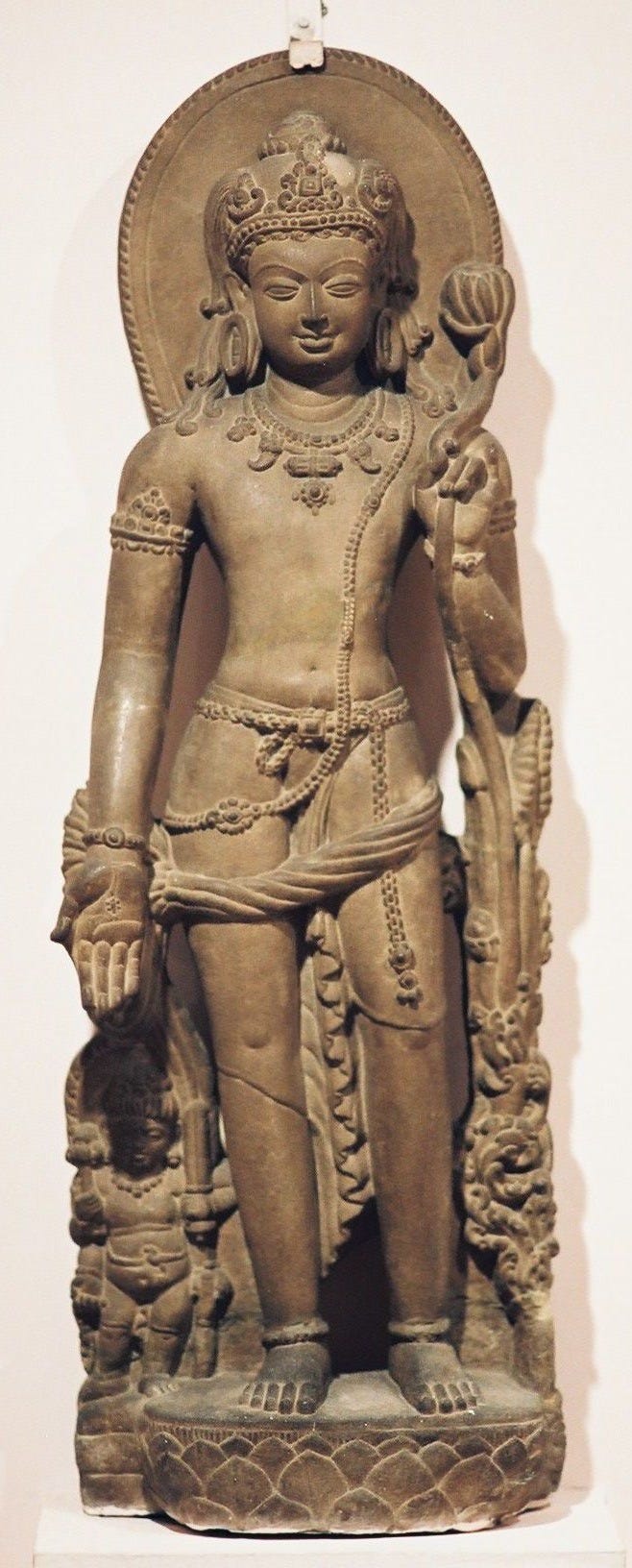
What is interesting is that, despite the depiction as a male in India, Avalokiteśvara has traditionally been depicted as female in China and East Asia, hence the “Goddess” in the name. There are also numerous instances of genderless or androgynous representations of Avalokiteśvara. I find it interesting that the concept of gender fluidity is not a new one. People have existed outside of a binary for millennia, with various degrees of visibility in response to various degrees of societal acceptance. (Trans rights are human rights.) In this post, I will use she/her and they/them pronouns when referring to Guanyin.
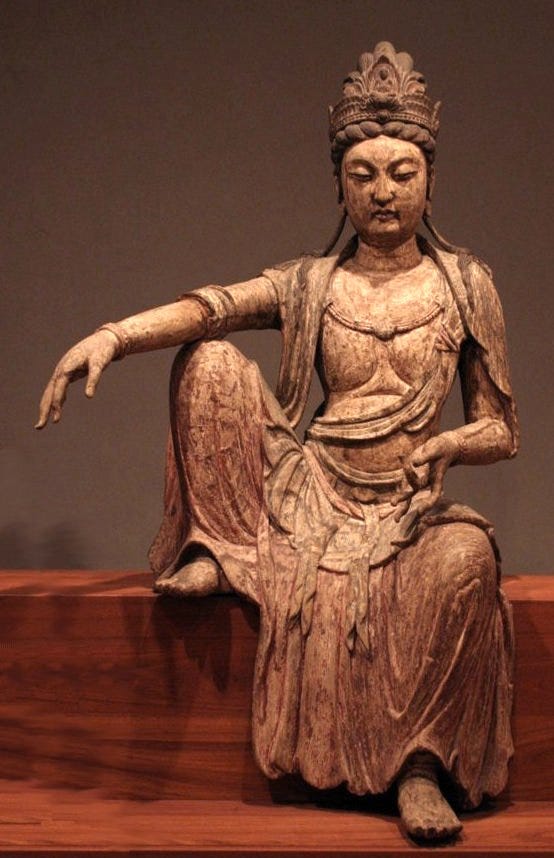
I should note that a bodhisattva is someone who has attained (or is working towards attaining) enlightenment and Buddhahood. According to some, this person can postpone reaching nirvana to help others achieve enlightenment. Guanyin reached enlightenment, an event celebrated on the 19th day of the sixth lunar month. I have seen multiple sources that suggest Guanyin is one of the most popular bodhisattvas in Buddhism, though it is difficult to find a sociocultural description of her. She is associated with compassion and unconditional love, so it is easy to see why she is so popular.
How did TGY become associated with Guanyin, and from where does the iron come? Apparently, there are two legends associated with the origin of this tea, both of which are set in Anxi County, Fujian Province: Wei and Wang.
Wei
Each day on his walk, Wei, a poor farmer, would pass by a rundown temple containing an iron statue of Guanyin. The state of the temple bothered Wei, so he decided to do what he could to help restore it. For years, he swept and cleaned it as well as lit incense. One night, Guanyin appeared in Wei’s dreams to express her gratitude for his work and dedication. She told him about a hidden treasure in a cave behind the temple. Upon awaking and going to the cave, Wei discovered the treasure as well as a tea bush. He decided to plant the tea bush in his field, where he nurtured it just as he had the temple. As the tea bush grew, it produced some of the finest teas. Wei shared both the treasure and the tea cuttings with the community, allowing the area to prosper. With their newfound wealth, the community worked to completely revitalize the temple. To show their gratitude to Guanyin, the tea was named Tieguanyin in her honor.
Wang
The scholar Wang encountered a tea plant beneath a Guanyin rock [statue?]. Intrigued by the tea, he brought it home, where he was able to cultivate it. The tea that it produced was astounding, so Wang decided to offer it as a gift to the Emperor. Impressed with the tea, the Emperor asked Wang about its origin. Having found it under a Guanyin rock, Wang named it after her.
Though their veracity is shaky at best, I am quite fond of the first origin story. It shows how tea can bring people together, and isn’t meant for royalty alone.
Tie Guanyin
As I stated earlier, tie guanyin is an oolong tea, which are a type of tea that has undergone some degree of oxidation prior to processing (i.e., curling and twisting). Oxidation is typically achieved by allowing the leaves to wither under the sun, with the amount of time between picking and final drying determining the degree of oxidation. Oolongs can also undergo rounds of roasting, which can change the flavor quite dramatically.
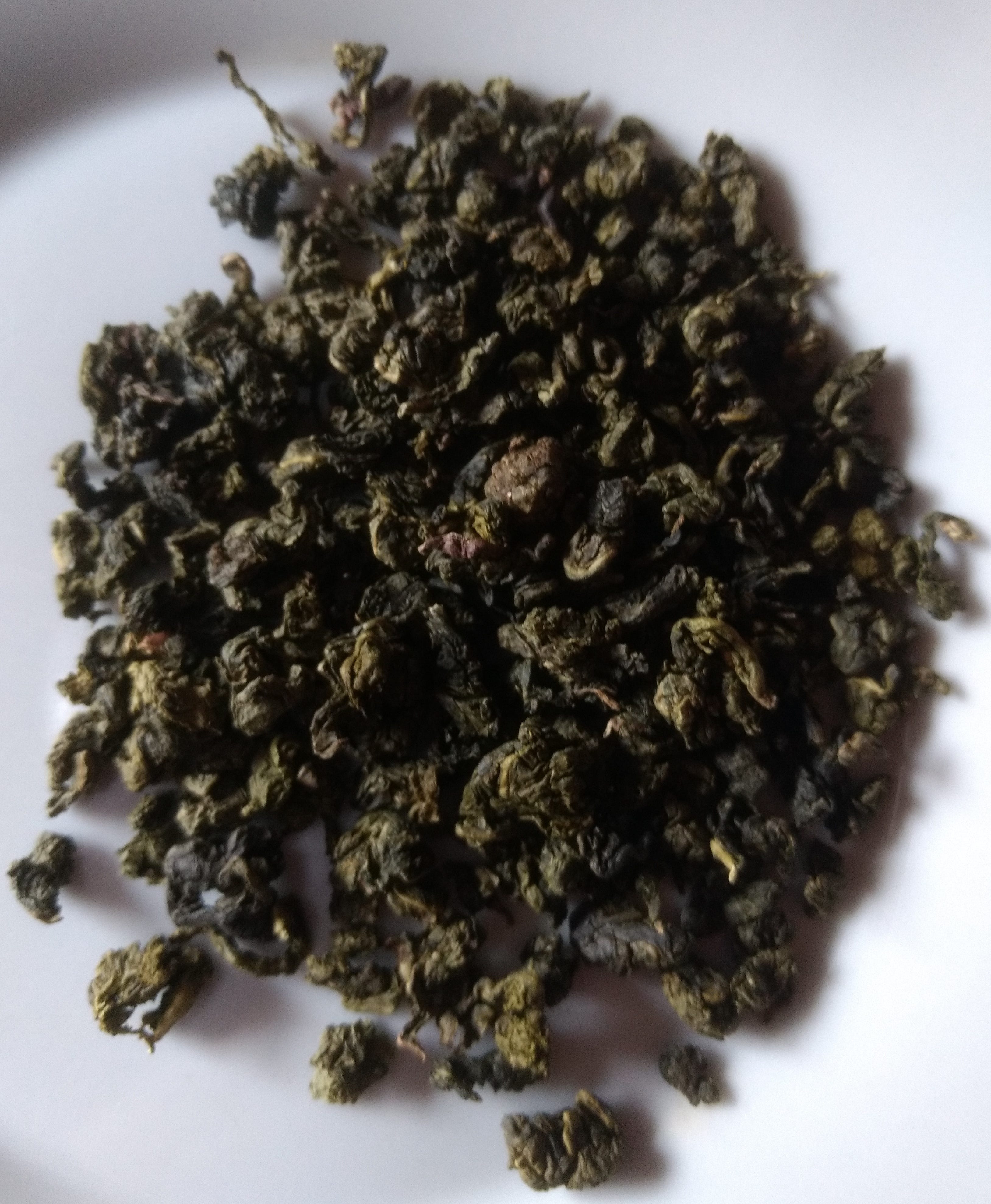
With tie guanyin, there are two primary types: Muzha and Anxi. Traditionally, muzha has been the dominant form of tie guanyin. In this style, the tea is roasted, giving it a stronger flavor (typically described as nutty). Recently, anxi style has become increasingly popular. Rather than roasting the tea, it is much more similar to a green tea, with a taste and aroma to match. To be truthful, I thought TGY was a green tea for the longest time. Every time I had it, the taste was closer to green tea. However, after looking into it, I was surprised to find that it was actually an oolong. The TGY from Teaism is a muzha.
(Don’t) Spill the Tea
Normally, I would discuss the store, but I covered Teaism (albeit not in its own section) in the article on baozhong. As such, I will note a couple of things before moving into the tea. First, I went to the shop in Penn Quarter, and it was great. I highly recommend checking out their restaurant, which is next door to the tea shop. That is where you can try the teas. (This might be unique to the Penn Quarter shop.) If you can’t make it there in person, they have an online shop. You can even buy teaware online. If I hadn’t gotten so much tea for the holidays, I would likely be restocking from Teaism.
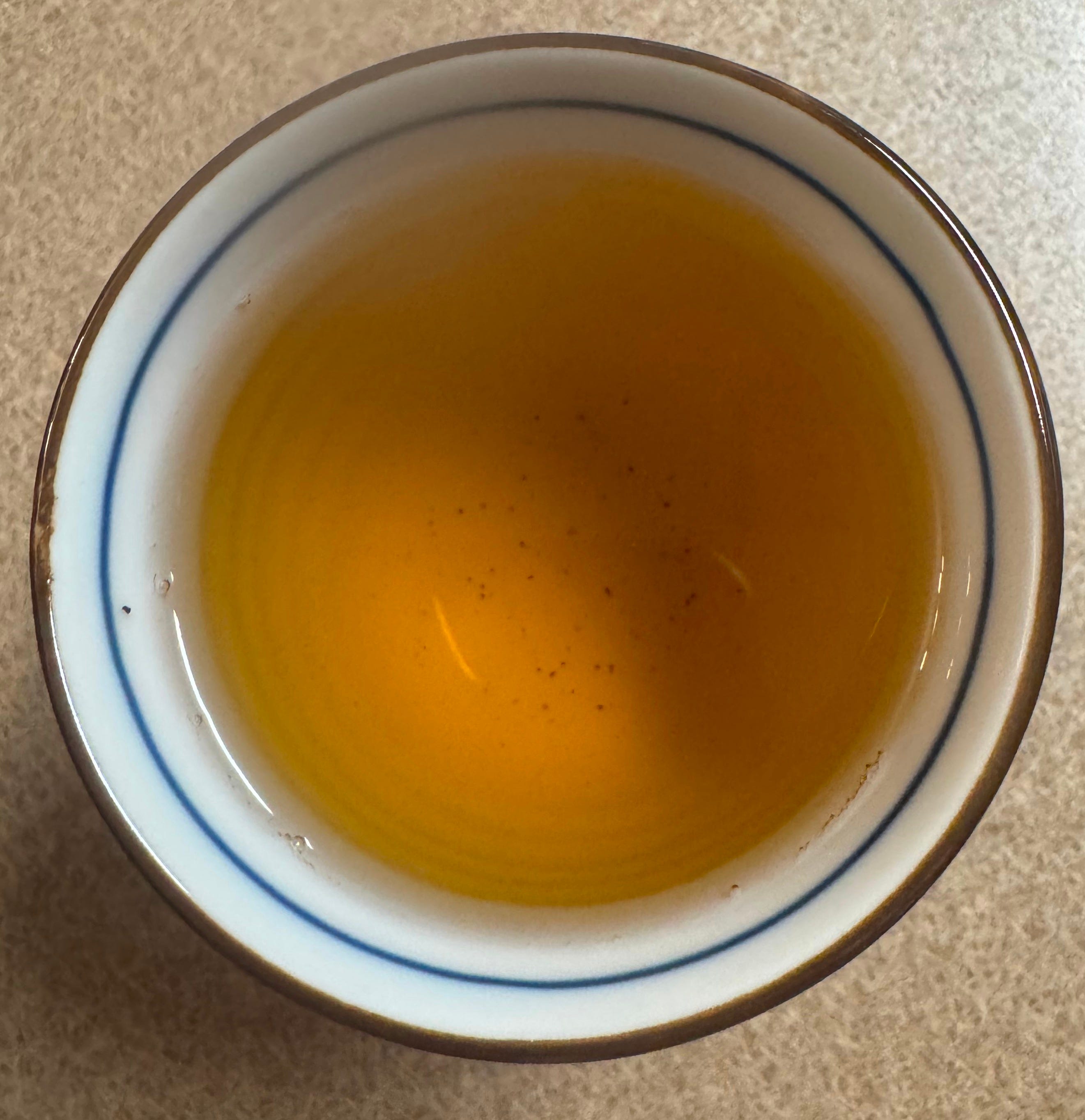
As the TGY from Teaism is a muzha, it was roasted during processing. This is apparent in its flavor, aroma, and color. Regarding flavor, there is definitely nuttiness to it. I get notes of chestnut. “Woody” is used in Teaism flavor description; however, I do not necessarily taste it. I think any woodiness is closer to a humic, grassy flavor, but maybe that’s me. The aroma lends some credence to the woodiness, although it is faint. Again, nuts and grass (that have been roasted) are the dominant scents. Interestingly, after steeping, the tea leaves smell a little dank, to be technical. I think that humic aroma becomes stronger. The liquid, however, is a little more subtle, having a faint nutty aroma. Finally, the color of the tea is a medium amber, not quite as dark as a black tea but darker than the baozhong or green tea.
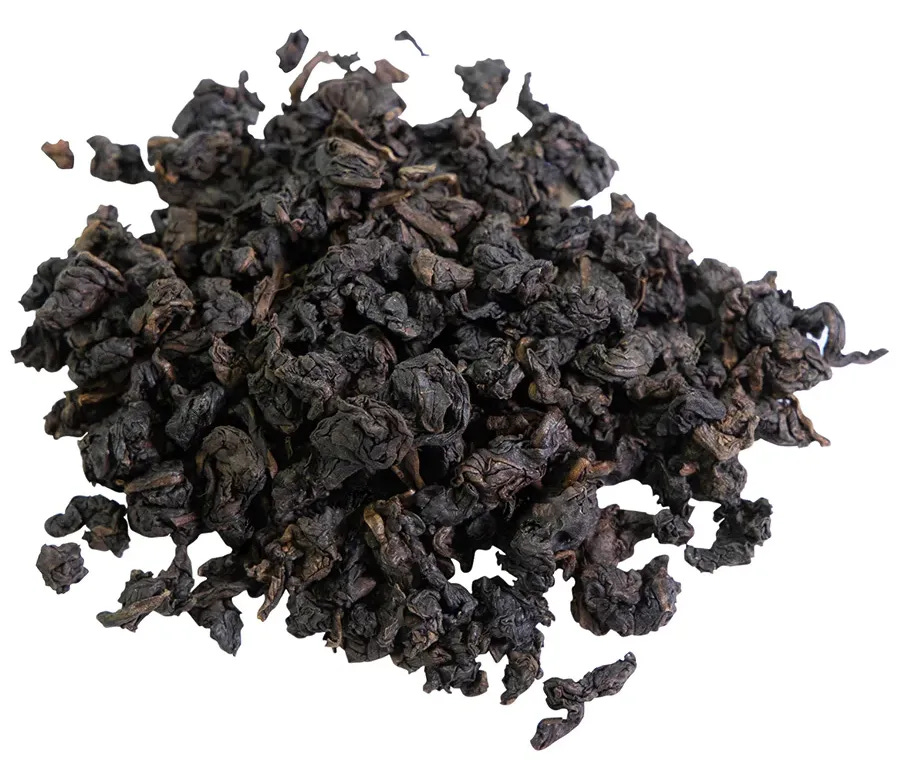
Teaism describes this tea as:
This rolled oolong has a nuanced, roasted fragrance and a robust, woody flavor. You can enjoy multiple infusions!
Our Tieguanyin is roasted is grown and produced in Taiwan’s Taipei Muzha district. Guanyin, or Kuanyin is the name of the “Iron Goddess of Mercy,” and this bodhisattva has different names and myths associated with her throughout Asia.
One thing that I want to note from their description is that you can get multiple steeps out of this tea. This makes it an ideal tea for gongfu-style brewing, though it also works well for western-style brewing. Regardless of the brewing style, this is a great tea to drink throughout the day. Oftentimes, I find myself doing exactly that, even making a cup or two while cooking dinner. Its flavor does not change significantly across multiple steepings, but it does become noticeably weaker by the fourth or fifth time, so I might add a little more to freshen the brew.
Instructions
3.5 g (1 tsp) for every 237 mL (8 fl. oz.) of filtered water
Using less water, like in gongfu-style, makes this more potent.
Water temperature: 82.2–87.8 °C (180–190 °F)
I tend to lean toward higher temperatures within that range, though if I am in a hurry, lower temperatures produce just as good a tea.
Steep time: 4 minutes
Of course, you can play around with this. I find that using a longer steeping time (5 minutes) does not necessarily make this bitter. Likewise, shorter steeping times (3 minutes) can produce an equally flavorful cup of tea.
Steep this multiple times! You are wasting good tea (and money) if you only get one steep out of this. I can get three to four steeps (or more with gongfu brewing) out of this before I need to add a little more.
Conclusion
I love this tea. I thought I loved it before, but the muzha style is absolutely divine. I might add this to the list of teas that I use to evaluate a shop. Honestly, it is hard to mess up this tea. If I had to hazard a guess, the easiest way to make a bad cup is by making the water too hot. I have yet to do that, but I might try it once to confirm while I have a decent amount of TGY remaining. Ultimately, this is a great tea to experiment with to find what works for you. It is incredibly forgiving, which I find to be more than fitting for tie guanyin.
Until next time.
A wonderful article. I have always loved this tea, for years only finding it in the much form. I remember buying it in Chinatown in London some 40 years ago. The shopkeeper was surprised - only old men drink that, he said. It was just wrapped in paper.