
Tea Time: Baozhong
Baozhong from Teaism

Quick note: I am going through some stuff, so I apologize for the lapse in posts. While I will do my best to write about climate and hazard research and events, writing about tea and sake might be all that I can muster right now. We’ll see. For those who have reached out, thank you. Please take care of yourselves and others.
Now… let’s talk tea.
I think I’ve been in an oolong phase for a bit. Upon reviewing many of my recent tea purchases, particularly those that are a little more expensive, I've noticed that they tend to be oolongs. There are probably many reasons why, though what immediately comes to mind is that oolong tea has an incredibly complex and varied flavor, and it can usually be steeped multiple times. This makes it an ideal tea for gongfu tea.
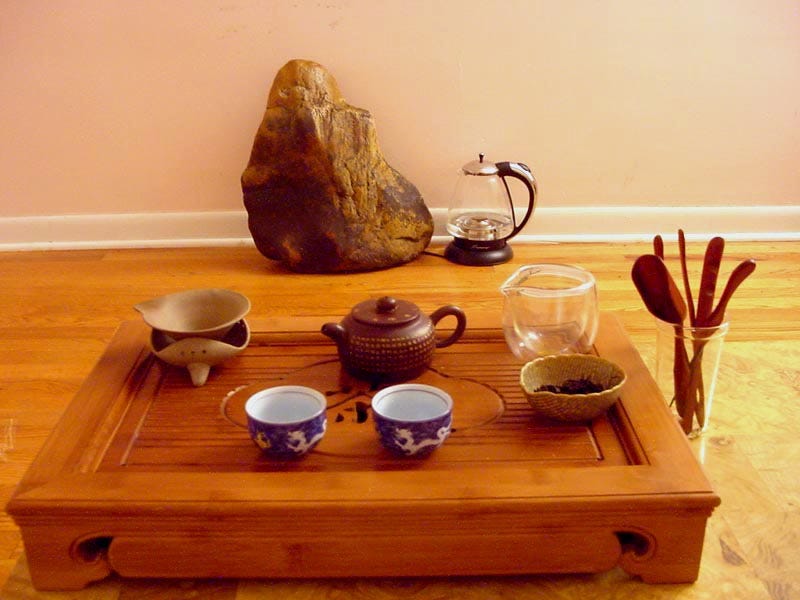
Before I continue, let’s talk about gongfu tea. This tea preparation technique uses multiple, short steep times, allowing the drinker to taste the subtle and evolving flavor profile of a tea. Although a gongfu tea set can be immensely helpful, setting it up and using it can be an entire ordeal. (It is often used in tea ceremonies.)
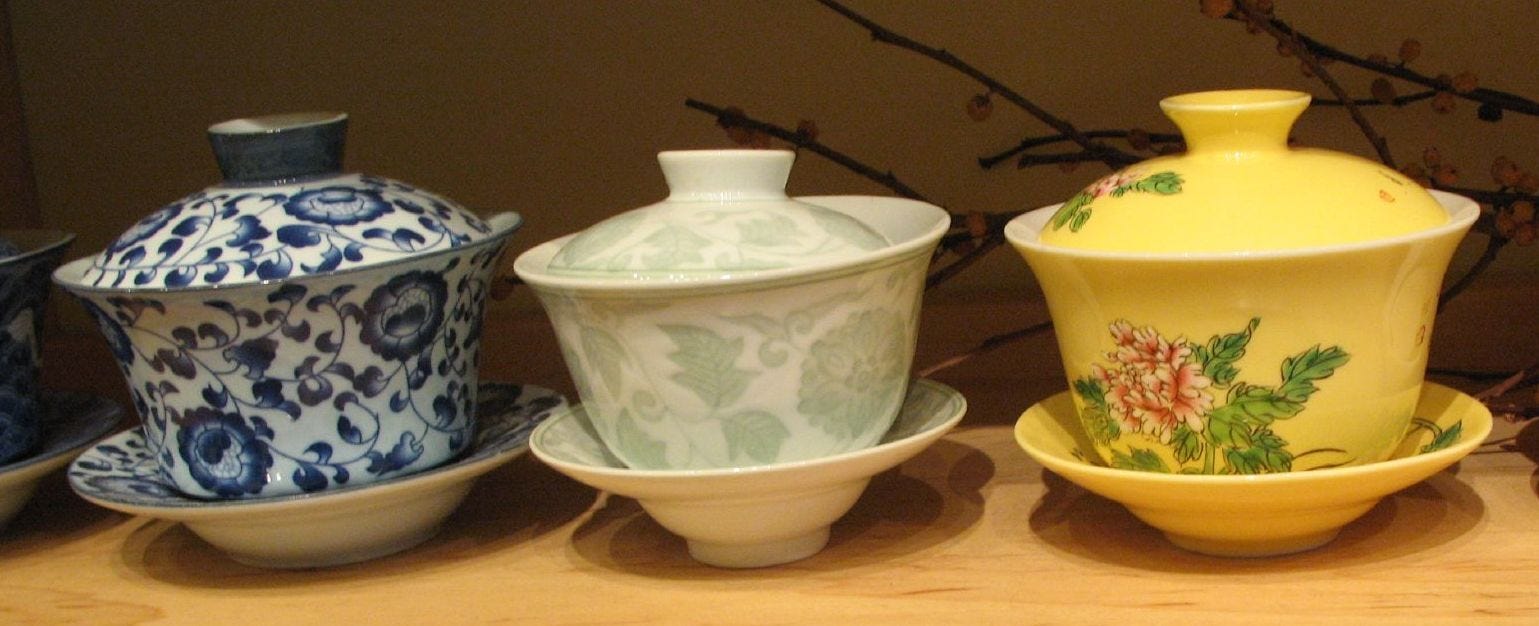
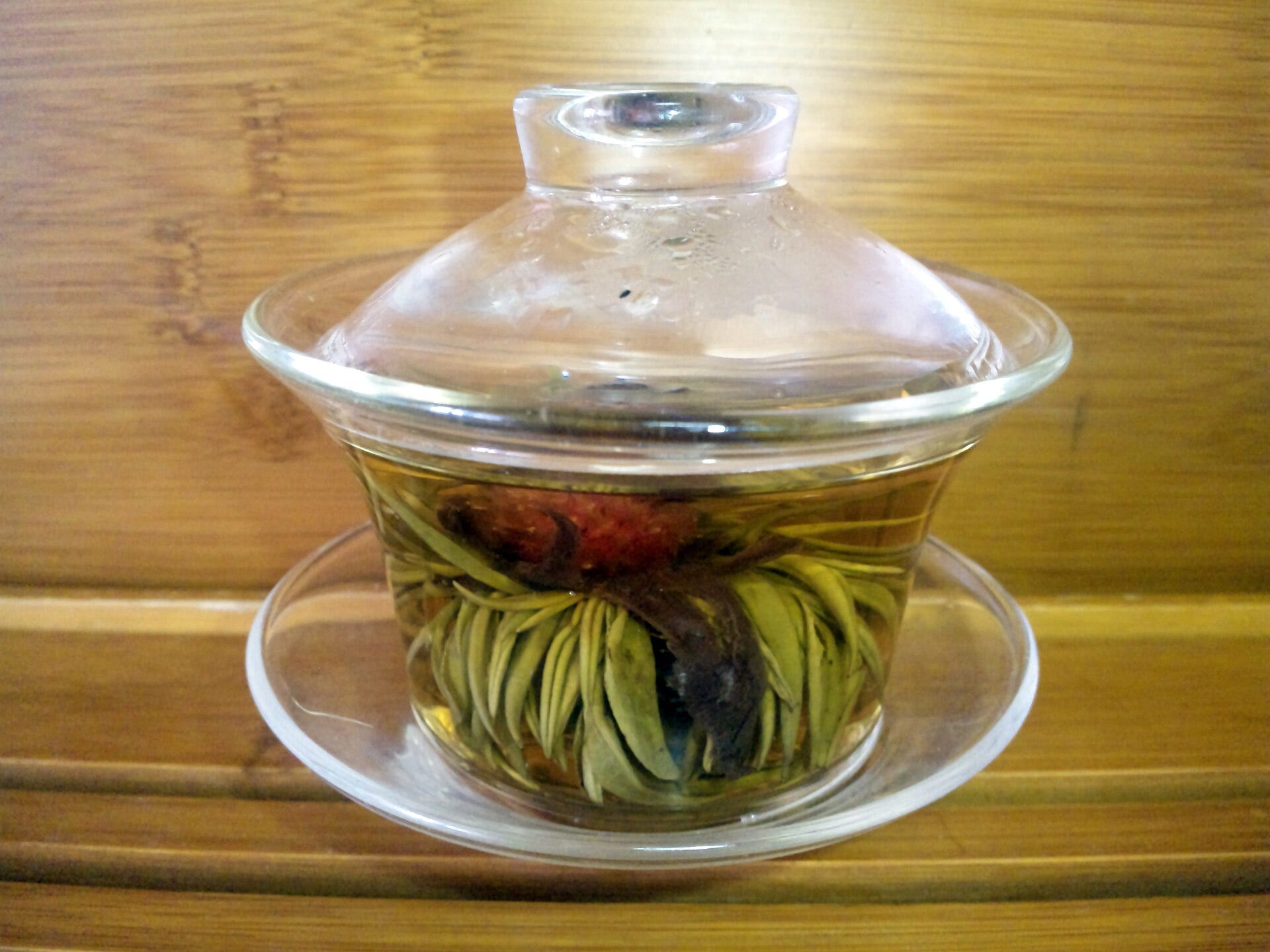
A simple alternative that works just as well is a gaiwan, which allows the tea leaves to steep in the drinking cup (though you can decant it, if you prefer). While this is part of a gongfu tea set, you can just use the gaiwan without much else. Honestly, if my gongfu tea set wasn’t a travel set, which makes setup and cleaning quick and straightforward, I would probably only use a gaiwan. I’ll probably end up buying one.
Okay, back to the tea. Oolongs are great. These teas undergo a partial oxidation while sitting under the Sun (usually). There can be industrial oxidation methods, but traditionally, the Sun has been used. The extent of oxidation the tea undergoes will depend on the type of tea. There are a lot of varieties of oolong, though the type I discussed here is baozhong, a type of Taiwanese oolong (though it can be produced in other locations).
I purchased this tea from Teaism in Washington, D.C., and I’ve actually purchased it twice. The first time I came across it was when I was in D.C. for a conference. I usually scope out tea shops when I’m traveling, and some colleagues suggested grabbing lunch at the Teaism restaurant in Penn Quarter. I required no convincing. Afterward, I stopped by the Teaism shop next door and ended up leaving with a few bags of tea. A little over half a year later, I found myself in D.C. again, and so I stopped by the shop to restock my low supply. If you find yourself in the area, I recommend stopping by. In addition to a great selection of teas, the store boasts a rich inventory of teaware.
(Don’t) Spill the Tea
As I stated earlier, the tea I’ve been drinking is baozhong. The store does not have a name aside from the type of tea, which is fairly common among no-frills teas (read: blends).
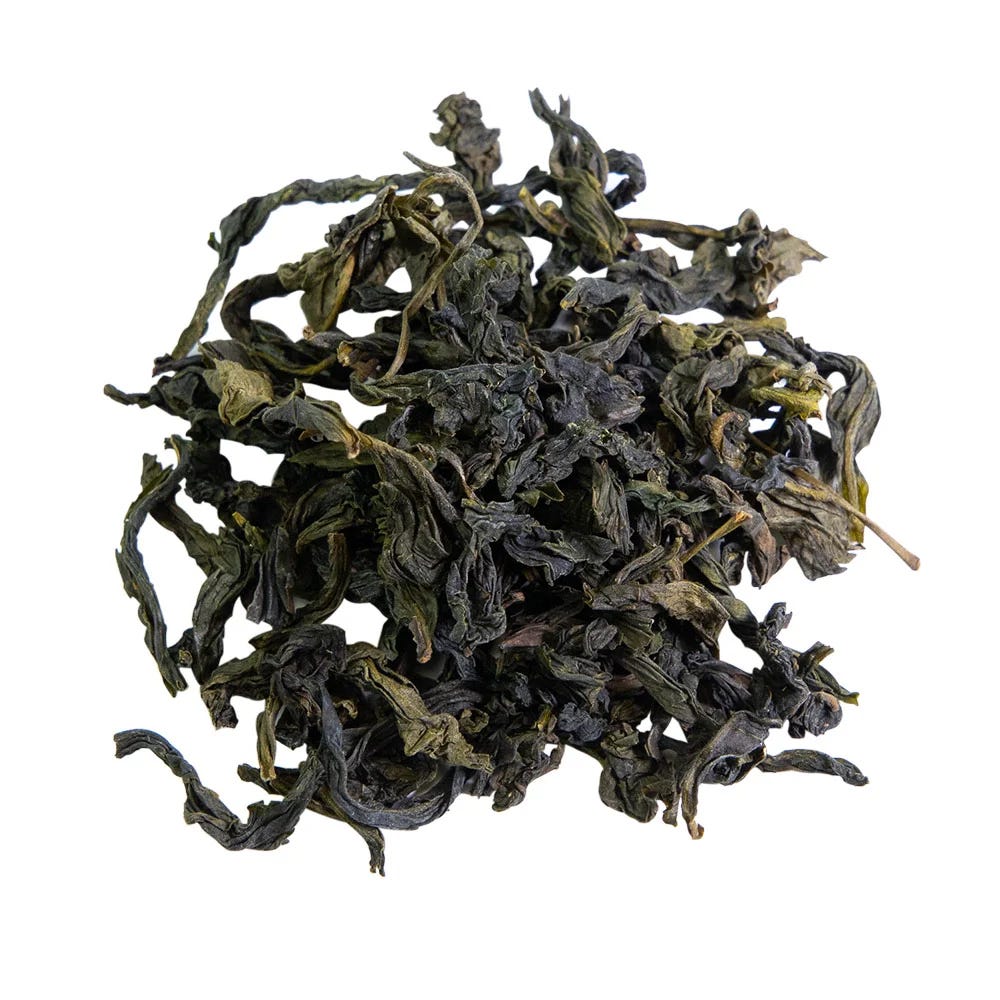
Per the store’s description, baozhong is “close to green tea with a rich, fresh aroma and complex, grassy flavor.” This is a more than apt description. I have found that the taste is on the lighter side, which suggests that the tea has undergone minimal oxidation. The aroma is much more floral than I anticipated, but I enjoy it. (I frequently find myself smelling the tea while I wait for the water to heat up.) The floral aroma also persists in the flavor of the tea, though it is subtle. Despite this, I think this helps keep the grassy flavor from becoming overwhelming.
Another way to describe this tea is delicate. Steeping times and temperatures can substantially influence the flavor of the tea. It is essential to keep this in mind, as oversteeping this tea can cause it to taste bitter, particularly on the first steep. Typically, I steep my teas for a longer amount of time when steeping for the second or third time. However, for the first steeping, I tend to lean toward a shorter time (3 minutes). If properly steeped, the result is a mellow yet aromatic tea that I find to be an absolute delight. There is something about this tea that tends to help me refocus or calm down (unrelated to caffeine, which doesn’t really affect me).
Instructions
2 tsp (~8.52 g) of tea for every 8 fl. oz. (237 mL) of water.
I’ll actually get a mass measurement because volume (tsp) and mass (g) are not equivalent.
Water temperature: 190 °F (87.8 °C)
Use filtered water.
Steep time: 3–4 minutes
I tend to steep it for 3 minutes if I know I’m going to make a second cup. If not, then I’ll steep it for 4 minutes. Be careful not to oversteep the tea because it will become bitter.
Conclusion
This is probably one of my favorite teas, although it may be a case of recency bias. And honestly, the price is not too bad ($18.50/2 oz). The benefit of visiting a teahouse is that you can often try the teas before buying them. Granted, you have to go over to the restaurant, but the food was pretty good. This tea is complex, with grassy, floral, and delicate flavors. It is not overwhelming, but it does need to be monitored when steeping to prevent it from becoming bitter. Honestly, if you are looking to get into oolong teas, especially if you are a fan of green teas, then this is a great starting point. If you are familiar with oolongs and are looking for something a little different, then this is also a good option. Honestly, you cannot go wrong with baozhong. I think this will be a staple in my house, which is good because Teaism ships.