
Tea Time: Organic Nettle Leaf
A nightmare plant turning over a new leaf as nettle tea from Arbor Teas

Okay, I am just going to nip this in the bud: I hate stinging nettle (Urtica dioica, though the entire genus is the worst). This is not even a hot take. (Hot take on plants: Rhododendron are terrible. Speaking from experience.) As the name implies, nettles have little stinging “hairs” on their leaves and stalks. They hurt, and the stinging can take a while to subside. If you enjoy being outdoors, especially if you hike, you have probably encountered this species, or another member of the genus.
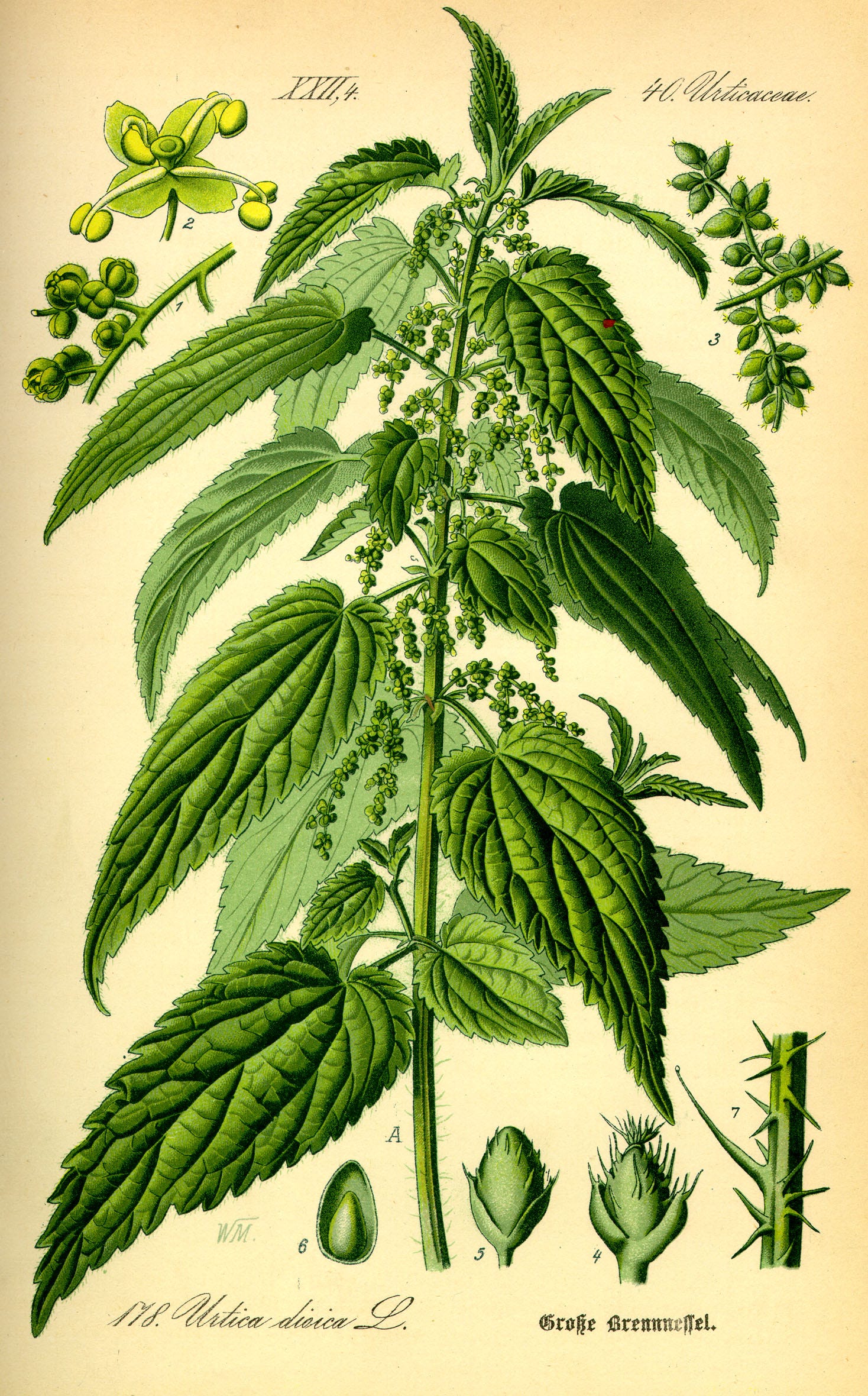
Thanks to the tree-ring side of my research, I have had my fair share of run-ins with this plant. Despite the pain they cause, nettles make a lovely tea. I first had nettle tea at Cup and Kettle in Bloomington, IN, during my Ph.D. It quickly became one of my regular teas thanks to its mellow flavor. (I’m not sure if they still sell it, but they do sell Flow Tea with organic nettle in it. I haven’t tried it, but if you have, let me know.) After leaving Bloomington, I had a difficult time finding it until I stumbled across it on Arbor Teas. (I probably could have tried harder with a simple search…) We’ll talk about the tea in due time, but for now, I want to highlight non-traditional teas.
What even is tea?
Technically, nettle tea is not actually tea. In fact, most herbal teas are not teas. If it doesn’t contain Camellia sinensis (or one of its close relatives), then it’s not a tea. That’s not the say that there aren’t blends that contain the leaves of C. sinensis. They exist, but many herbal teas are technically herbal infusions (sometimes called tisanes). Many of these “teas” have deep roots in herbalism as traditional medicines. For example, Echinacea species, particularly E. angustifolia, has been used as a traditional medicine among multiple indigenous nations of North America a variety of ailments. Now, you can go to the store and buy echinacea tea. Ultimately, the origins of these tisanes span a larger range of geographic and cultural backgrounds than traditional teas. To be clear, I’m not saying that traditional teas are not diverse geographically or culturally. Rather, tisanes have origins in and outside of China, such as in France, South Africa, or the Philippines, and each has its own unique cultural history.
What about nettles? Native to Europe, nettles have been used in traditional medicine for centuries, if not millennia. The nettle has been used as a galactagogue (a lactation inducer), something that persists to this day [1]. Nettles are also listed in the Nine Herbs Charm (or Nigon Wyrta Galdor), a pagan Anglo-Saxon charm written in the 10th century:
Old English (normalized)
Stiðeheo hatte, ƿiðstunað heo attre ƿreceð heo ƿraðan, ƿeorpeð ut attor + Þis is seo ƿyrt seo ƿiþ ƿyrm gefeaht þeos mæg ƿið attre, heo mæg ƿið onflyge heo mæg ƿið ða[m] laþan ðe geond lond fereþ
Modern English (direct)
Stiðe [nettle]she is called, she withstands venom, she drives away harm, casts out venom. + This is the wort that fought against the wyrm, this is potent against venom; she is potent against on-fliers, she is potent against the loathsome one that fares across land.
Modern English (stylized)
She’s calledStithe [nettle], she who withstands venom; she chases away malice, casts out pain. This is the plant that fought against the wyrm. She is mighty against venom, she is mighty against air-illness; she is mighty against the horror who travels over land.
Source: https://www.mimisbrunnr.info/nigon-wyrta-galdor

(I've added nettle since it is not used in the texts.)
It is unclear whether the second stanza is referring to the nettle or another plant (stune) mentioned in the first two lines of the first stanza (which I removed). Regardless, the nettle was considered a powerful plant, strong enough to fight a wrym (a type of dragon). Its role extends far beyond traditional medicines, being used as an ingredient for cooking (e.g., hortopita), making textiles, and much more. Given its history and utility, it’s no surprise that people made a tea using nettles.
Organic Nettle Leaf
About the Store
If you have ever purchased loose-leaf tea, you know that it can be a commitment. How many cups can a 4-oz (~113-g) bag of tea make? Quite a lot, actually. Plus, what if you end up not liking the tea? While these are minor issues in the grand scheme of things, I find it helpful to see if stores offer a sampler size. As a bonus, you can get more variety in your order rather than limiting it to a couple of teas. It’s honestly a great deal. That leads me to Arbor Teas in Ann Arbor, MI.
Arbor Teas was started in 2004 by Aubrey and Jeremy Lopatin. As the store has grown, Aubrey has taken over, and Arbor Teas is now owned and operated by an all-women team. The core principles of this company are organic teas, sustainability, and social welfare. All of their teas are certified organic. (They also sell herbs, which are certified organic, too.) The company is deeply committed to fair trade practices, both at the shop and the farms where they source their tea. All of this ultimately feeds into their sustainability goals. It is honestly refreshing to see a (tea) company that is committed to building a better world. The About Us page contains a wealth of information, including details and FAQs related to their organic, fair trade, and sustainability practices. It is worth reading through.
One other aspect of the store that I appreciate is that you can order sample-sized (or small) amounts of tea for a more than reasonable price. The organic nettle tea, for example, was $5 for 21.3 g (0.75 oz), which makes about nine servings (more if you steep it more than once). It is a great way to try many different teas while also being budget-conscious and minimizing waste if you don’t like one. (Thanks to this option, I actually have a few more teas from Arbor Teas that I will be discussing over the next few weeks, so stay tuned.)
(Don’t) Spill the Tea
Arbor Teas sources their organic nettle tea from Foster Farm in Calais, VT. According to the website, the farm has been owned and operated by the same family for over 200 years! The only ingredient in this herbal tea is organic nettle leaf (trichomes are not included, thankfully).
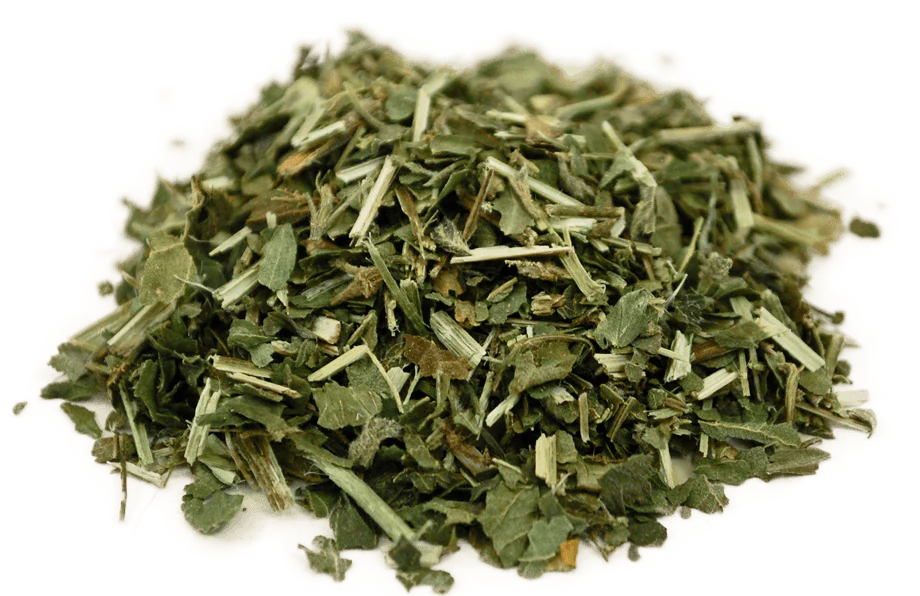
Like many herbal teas, nettle tea is caffeine-free, making it a great option for a late-night cup of tea. There were a few flavors in this tea, but I think what I noticed the most were the buttery, grassy notes. It was an interesting mix of savory and mellow, making this tea something that would be great by itself or with a meal. There was a strong grassy scent to both the leaves and tea, which is unsurprising. However, the actual drink itself smelled more like freshly cut grass after a rain shower (perhaps in early summer). I suppose the best way to describe this tea is “fresh.”
According to Arbor Teas, I’m not that far off from their description:
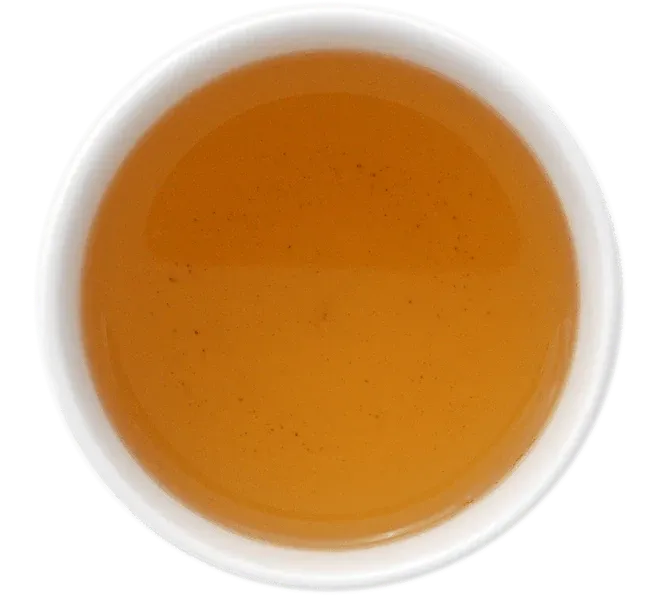
Our loose leaf Organic Nettle Leaf (Urtica dioica), also known as stinging nettle, is a perennial member of the Urticaceae family grown in Vermont, USA. Contrary to its name, this dried organic herbal tea does not sting like the fresh leaves do! It is a common ingredient in folk medicine because of its high iron content and diuretic properties. While usually consumed for health reasons, Nettle Leaf is a caffeine-free herbal tea that can also be enjoyed for its flavor -- however it often doesn’t make a convert until the third or fourth try. Its green leaves brew a vivid yellow cup that has a distinct aroma of damp hay and dandelion. The thick, herbaceous brew lingers in the upper palate with sweet, grassy notes that give way to savory, buttery tarragon as the liquor cools.
Instructions
1 tsp of tea for every 237 mL (8 fl. oz.) of filtered water
(Sorry, I don’t have it in grams because I used most of the tea before I got my herb scale)
Water temperature: 100 °C (212 °F)
Steep time: 5–7 minutes
Although it does not get bitter (to me), I found the flavor became “humid” (for lack of a better term) if it was steeped for too long.
You can steep this multiple times, though the upper limit was 3 times for me.
Ultimately, play with the settings to find what you like the most.
Conclusion
Overall, this was a simple but enjoyable tea. Very straightforward and down to earth. It works well in both western- and gongfu-style brewing. Both yielded cups that were visually and aromatically reminiscent of green tea. Although the flavor of green tea is present, I think nettle tea has a unique and distinct taste in its own right. Because of its use in traditional medicine, this tea was a nice way to, in some capacity, experience the past. But more importantly, I used it as an opportunity to appreciate the diversity and variety that Earth has to offer.
Until next time.
References
Westfall, R.E., 2024: Galactagogue herbs: a qualitative study and review. Canadian Journal of Midwifery Research and Practice. 2(2): 22–27. doi: 10.22374/cjmrp.v2i2.184