
Izakaya: Angelfish
A delightfully sweet junmai daiginjo from Arkansas

For the better part of a week, I have been struggling with how to start this post. And I still am struggling. A bunch of ideas came to mind: my complicated relationship with Arkansas, rice production, and even getting into the biology and ecology of the angelfish. None seemed appealing or relevant (though I might touch upon rice production later). Despite the struggle, I have continued to return to the idea of premium alcohol. Odd, but let’s run with it.
What makes a premium alcohol premium? Is it the ingredients? Place of origin? Its history? Cost of production (including labor) plus the service industry markup? Or is it simply a fabricated social construct in our unending quest to flaunt wealth and be part of an “in” group? (Okay, that last one might be somewhat of a stretch.)

Realistically, what constitutes “premium” can be determined by many different factors. In addition to the ones listed above, batch size, age, and even brand can determine whether an alcohol is considered premium. (Quick side note: Premium is the low end of top-shelf, according to the Distilled Spirits Council of the United States. Above premium is high-end premium, followed by super premium.)
Regardless of whether there is an air of pretentiousness surrounding top-shelf drinks, I do think there is some merit to the classification. This is especially true when it comes to factors that influence the taste and quality of the drink, such as ingredients or age, rather than artificial scarcity or marketing budgets. Compare any alcohol in the $30–50/bottle range with its well-drink counterpart. Ignoring branding and whatnot, which would you prefer to drink by itself (and not as a shot)? I do not know many people who would prefer a glass of your standard Jim Beam bourbon over, say, Basil Hayden. (I am not knocking Jim Beam or anyone who likes it. I am just trying to illustrate a point. Ultimately, you do you.)
So, this begs the question: what would be considered a premium sake?
Premium Sake
There seems to be a fair amount of debate over how, or even whether, sake can be ranked. Some argue that factors such as ingredient quality and processing play a significant role in determining the quality of sake. (That’s probably part of the reason why many of the users on /r/sake openly and actively hate the Gekkeikan sake that you typically come across in the store. Personally, I do not have a problem with it.) I think there is some truth to that. For example, different rice polishing ratios impart different flavors to the sake. Likewise, many of the ingredients will reflect the environmental conditions in which they grew, so phenomena like droughts, which can stress an organism, may also manifest in the sake. Others argue that ranking sake is a pointless endeavor because no style is inherently better than another. Even within a particular style, there is so much variability in flavors and other characteristics, further complicating any attempt at ranking. I tend to take the middle ground in this.
At John Gauntner’s Sake World, there is a good post discussing sake quality. In it, he includes a table of sake styles, separated by whether or not additional alcohol is included, ordered by quality. Junmai daiginjo (without additional alcohol) and daiginjo (with additional alcohol) are at the top, while junmai and honjozo are at the bottom. (Below that is futsuu, which could be considered your average sake.) From what I can tell, the primary factors that cause this distinction are the rice polishing ratios and the labor and precision required for brewing. Here is Gauntner’s explanation of junmai daiginjo:
A subclass of junmai ginjo-shu, brewed with very highly polished rice (to at least 50%** see below) and even more precise and labor intensive [sic] methods. The pinnacle of the brewers’ art. Generally light, complex and fragrant.
Compare this with his explanation for junmai:
Made with only rice, water and koji mold. The rice used must be polished to at least 70%**. Often a full and solid flavor profile, clean and well structured. Note also Tokubetsu Junmai-shu, or “Special Junmai-shu,” which merely indicates more highly polished rice, or the use of very special sake rice.
So, there seems to be something there. Milling the rice plays an important role because the more that is stripped away, the cleaner the product. (As a consequence, though, brewers have less material with which to work.) There is an upper limit, but nevertheless, it seems like an easy way to delineate sake quality. But it can only go so far because what is considered “premium” is dictated by the drinker's palate. In other words, if you like it, then that’s all you need to know. I think Gaunter’s closing words summarizes everything best:
There is plenty of immensely enjoyable sake not in the top of the top classifications. In fact, sometimes such sake has more presence, uniqueness, and appeal than super dooper hoity toity high priced daiginjo. Well, sometimes, anyway. Top of PageSake is almost always fairly priced.
You generally get what you pay for with sake. Up to a reasonable limit, if you pay 25 % more for sake B then [sic] sake A, you can expect about a 25% increase in quality and enjoyment (assuming that the particular “quality” increase in that particular sake is what you are looking for and prefer!). There are exceptions: there is some sake that is a bit pricey due to its lofty reputation. There are also a few tremendous bargains out there. But for most sake, those not extremely expensive or extremely cheap, you will see an increase in quality that for the most part parallells [sic] the increase in price. Note, speculation by the market and the opinion of “experts and critics” does not affect at all the market price of sake in Japan. Which is nice.
Angelfish
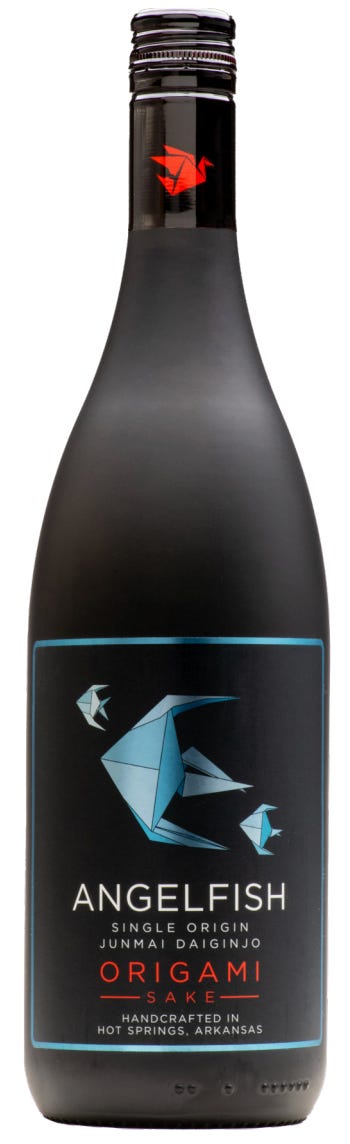
The sake that I am discussing today is Angelfish from Origami Sake in Hot Springs, AR. Because I did not talk about it earlier, I am going to briefly discuss junmai daiginjo before getting into the brewery and the sake.
As with junmai of any kind, four basic ingredients are used to brew this sake. Importantly, for junmai daiginjo, the rice polishing ratio is 50 % at a minimum. However, brewers often mill beyond that, resulting in an incredibly clean sake. As one would expect, this is an incredibly labor-intensive, precise process. Because of the factors, the price of junmai daiginjo tends to be on the higher side. (I have seen some bottles that were well over $1000!) This sake is generally served chilled, but some can be enjoyed at room temperature or warmed. (This is more the case for sake at lower price points.)
About the Brewery
I kept the junmai daiginjo description short because I really want to talk about Origami Sake. I have close ties to Hot Springs because I attended a state-run, residential, math-and-science high school there. Hot Springs was initially set aside as a federal reserve in the 1830s, making it the oldest place managed by the National Park Service. (The first national park is Yellowstone.) Yes, I went to high school in a national park. Honestly, that is pretty cool when you think about it.
I am likely dating myself, but that was well before Origami Sake opened. Hot Springs, AR, seems like such a random place to open a sake brewery, especially with the capital, Little Rock, about an hour away. There are many rice farms in Arkansas, the leading rice producer in the US, so you could easily deliver rice to the brewery, regardless of its location. Why not open in Little Rock, or even somewhere in Northwest Arkansas? It really comes down to water.
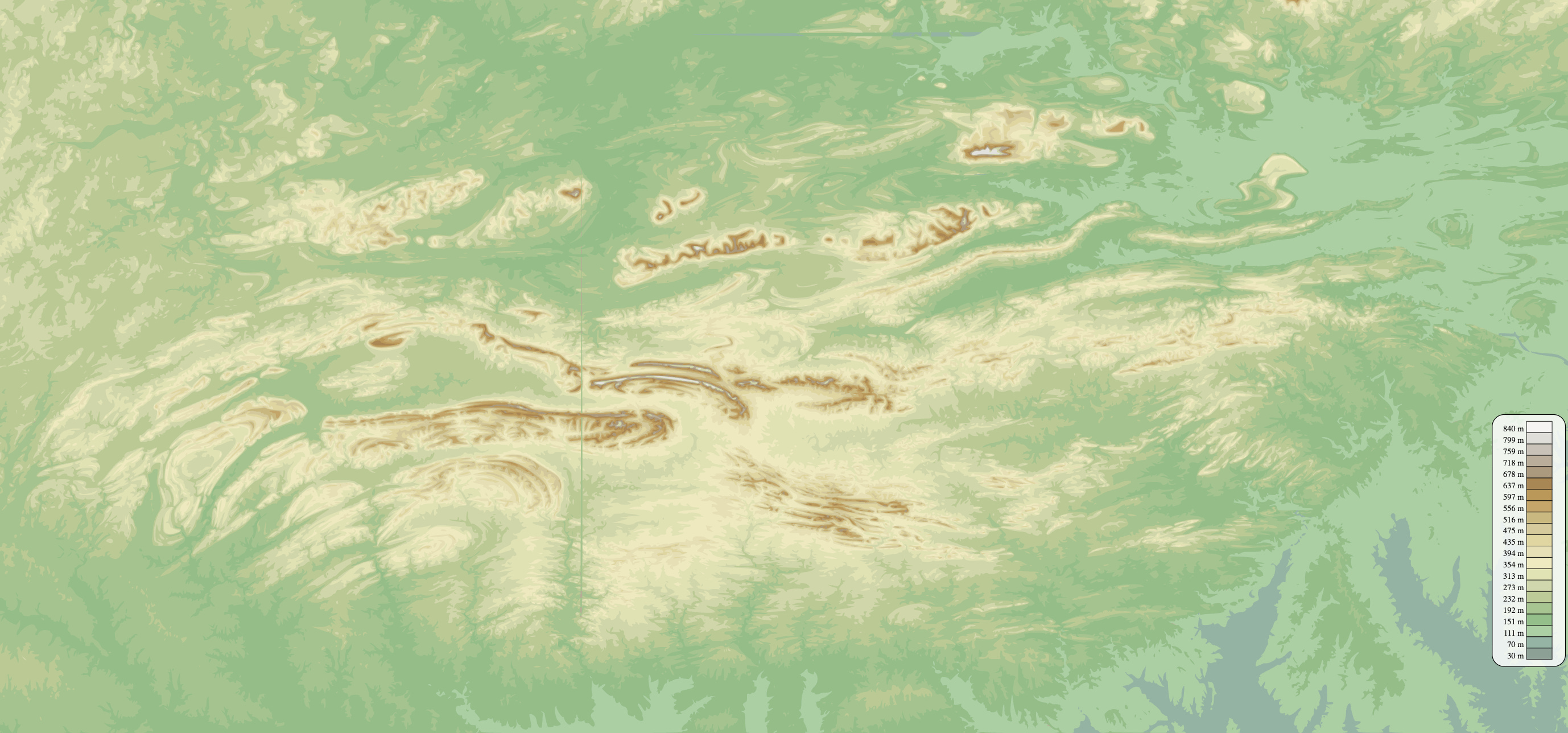
Hot Springs is nestled in the Ouachita Mountains (pronounced “wash-uh-taw), a small complex of mountains that run east-west in Arkansas and Oklahoma.
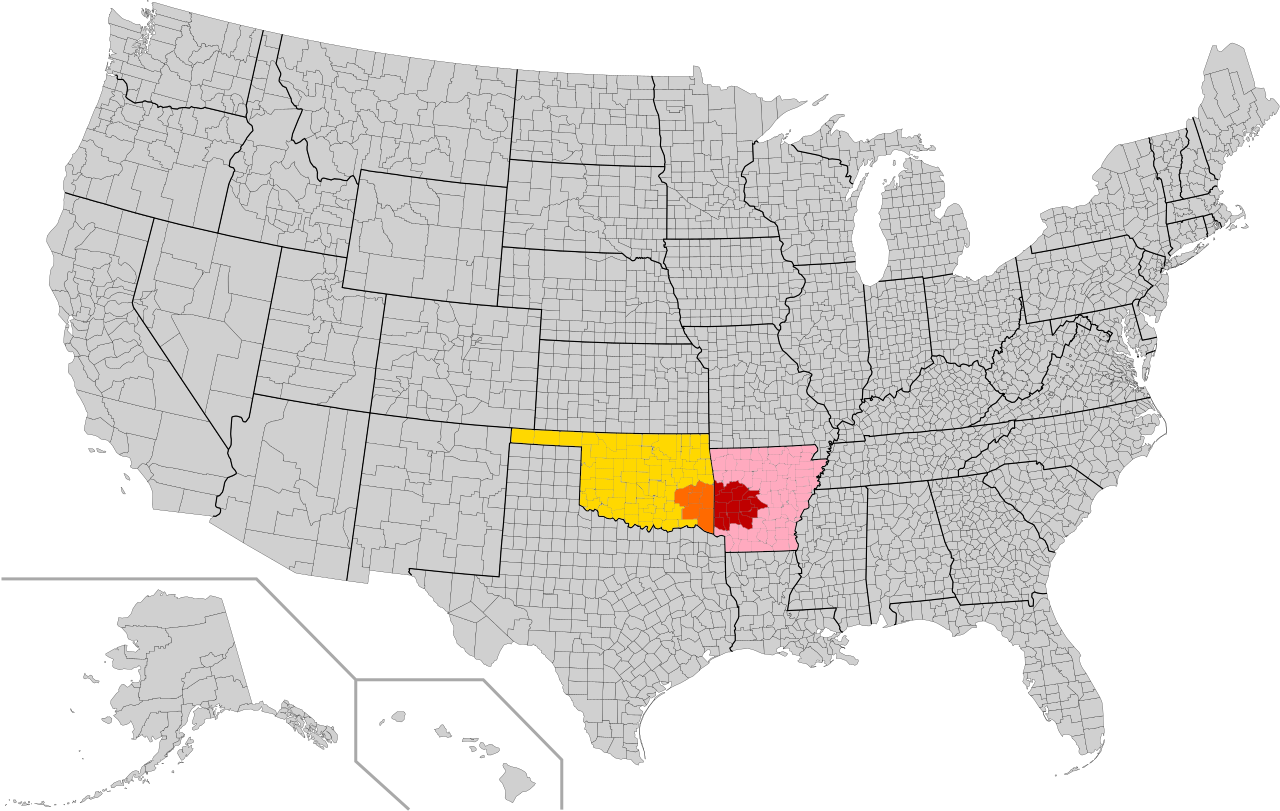
Okay, stick with me on this because I am a climate scientist whose geology background is largely focused on the coast (and always tied to the climate). The Ouachita Mountains consist of a series of Paleozoic Era strata (538.8–251.9 Ma) that were deformed during the Ouachita orogeny, a mountain-building event that began during the Pennsylvanian Subperiod (323.4–298.9 Ma). (The intervals captured in these stratigraphic sequences range from the Cambrian Period (538.8–486.9 Ma) to the Pennsylvanian Subperiod.) This was the result of the South American plate subducting beneath the North American plate. Normally, there are mountains and volcanoes relatively close to the subduction zone, as we see along the west coast of South America. However, that was not the case here. Instead, these mountains did not experience much volcanism or metamorphism, which is unique. Additionally, the east-west orientation of the mountains is uncommon in the US.
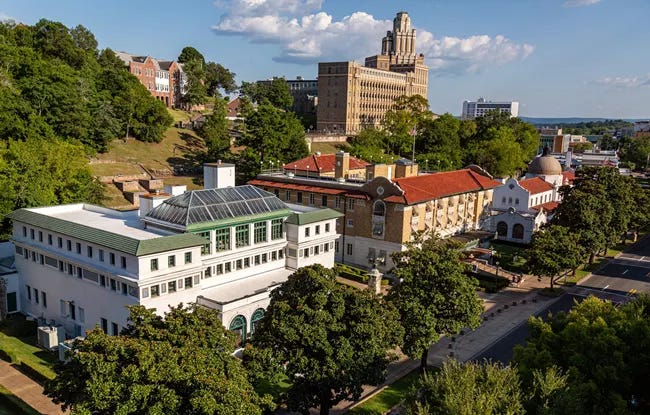
That is about as complex as I am willing to go with this, namely because I am a climate scientist rather than a tectonic geomorphologist. Stopping there, we are led to the following questions: where does the water come from, and why is it hot? The actual hot springs are located within a narrow area in the mountains, predominantly in a 460-m by 120-m area in the downtown area. This is also where you find the row of bathhouses as well as some surface water features, natural and man-made. Al Capone used to frequent the bathhouses back in the day. He was also a patient at the old hospital, which eventually became the high school's dorms. (Following the construction of new dorms, the building is no longer in use, and it might have been torn down.)
Various studies have examined the sources of the hot springs in Hot Springs, AR. Using dating techniques, notably radiocarbon, the water was determined to be meteoric, meaning it is rainwater. It takes about 4000 years for the rainwater to make its trek down into the mountains before returning to the surface in the span of about a year. The result is a purified water that has been used for medicinal and drinking purposes for centuries. You can see why this water would be pretty good for brewing.
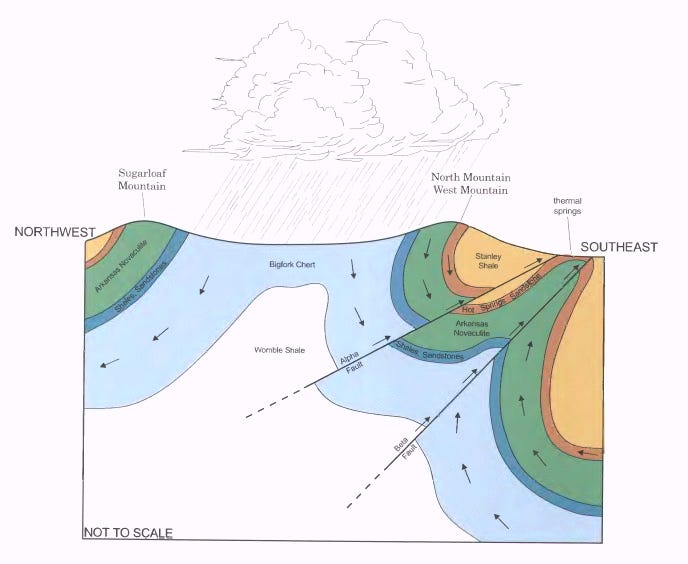
Okay, so we have meteoric water. Unless geologists missed something that should have been alarmingly obvious, the area is not volcanically active, neither at the surface nor at depth. What makes the water hot then? It comes down to a geothermal gradient. Essentially, as depth increases, the crustal temperatures increase due to heat transfer from the mantle. (This can be used as an energy source, too, i.e., geothermal energy.)
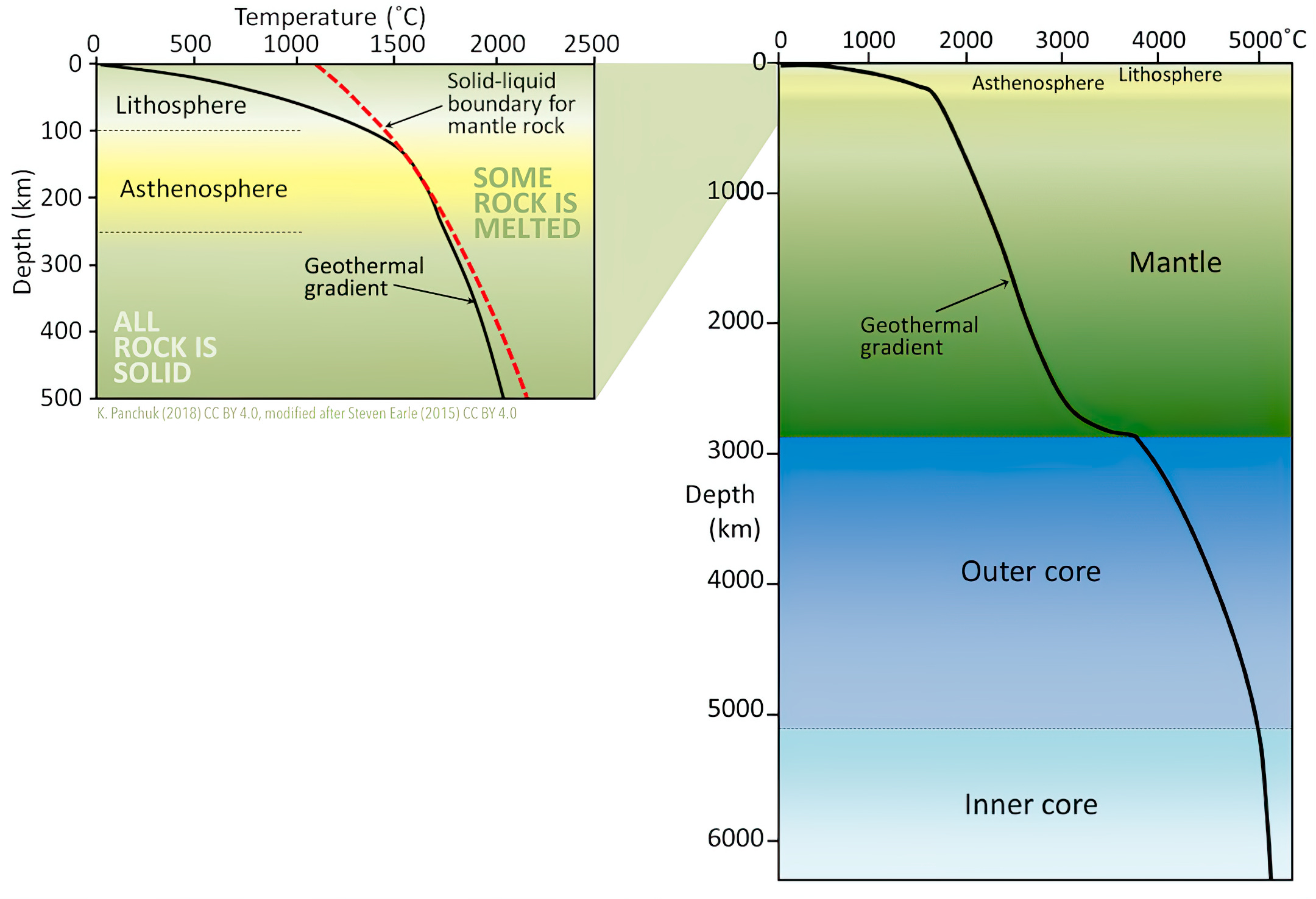
That’s it! Rainwater being heated up by the natural temperature gradient inside the Earth has resulted in this iconic place. And it leads us to Origami Sake.
I have spent a lot of time on this, and I want to make sure I can get to the sake without this post going on for too long. I might cover the brewery in more detail for some of their other sakes, though I think I already briefly discussed it in my post covering "A Thousand Cranes."
Kanpai!
I am just going to say this upfront: Angelfish is my favorite sake from Origami Sake. It is smooth, light, and balanced. There are definitely sweet flavors, but they are not overwhelming. According to the technical notes, you should be able to taste honeydew, pears, figs, and honeysuckle. I could only really taste the pear and honeysuckle, with a hint of honeydew.
The rice used in this is Yamada Nishiki, which is sourced from Isbell Farms in England, AR. True to form, the rice polishing ratio is 40 %, meaning 60 % of the grain has been removed. That is a lot. However, that is exactly what makes this such a clean sake. The yeast variety is AK24. I cannot find anything about this yeast, so it might be proprietary or something.
The sake apparently pairs well with “braised eel, steak tartar, and caprese salad.” I did not have it with any of these, but I can say that it pairs well with sushi, lo mein, and a simple Korean “beef” bowl (rice, Beyond Meat “beef” tips, cucumbers, and garlic chili sauce). They recommend drinking this chilled, and I tend to drink it closer to 4.4 °C (40 °F) rather than 15.6 °C (60 °F). Drinking from an o-choko (using a tokkuri to serve) works well, as does a wine glass. I did not get a chance to try it with a masu, but that just means I will have to get it again. And I will. Or my parents will when they visit me.
Conclusion
Angelfish is a great sake. I strongly recommend getting it if you ever have the chance. I think it truly represents what someone can do when they respect a culture and respect their backyard. The result can be a premium product made right at home.
Until next time.